

What if the most valuable inheritance you ever receive isn't a physical object, but the unfiltered sound of a story that only your grandmother can tell? We often carry a quiet weight, a fear that if we don't act soon, the vibrant textures of our elders' lives will eventually fade into silence. You likely feel the pull to connect more deeply, yet the hesitation of not knowing which family history interview questions for grandparents to ask can feel like a barrier. It's natural to worry about the awkwardness of a formal interview, but your desire to document this legacy is the first step toward creating something permanent.
In this guide, we provide the structure you need to capture the soul of your family story through intentional questions and thoughtful preparation. We believe that documenting a story is a collective act of preservation, one that honors the past while grounding the future. You'll learn how to approach these conversations with grace, ensuring every session feels like a meaningful exchange. We will also outline a clear path for organizing these memories into a physical heirloom title, allowing you to cultivate a lasting family catalog that future readers will cherish as a cornerstone of their identity.
Key Takeaways
- Establish a calm environment and set clear expectations to ensure your grandparents feel respected and at ease throughout the conversation.
- Use a structured list of family history interview questions for grandparents that move through specific life stages to uncover detailed and evocative memories.
- Honor the ethics of memory by allowing for silence and learning how to gently pivot when a conversation touches on painful or private experiences.
- Transition your recorded conversations into a permanent physical title, such as a volume from The Heirloom Series, to create a tangible legacy for your family catalog.
- Focus on capturing the felt experience of their lives rather than just genealogical data to strengthen your sense of connection and collective history.
The importance of preserving family oral traditions
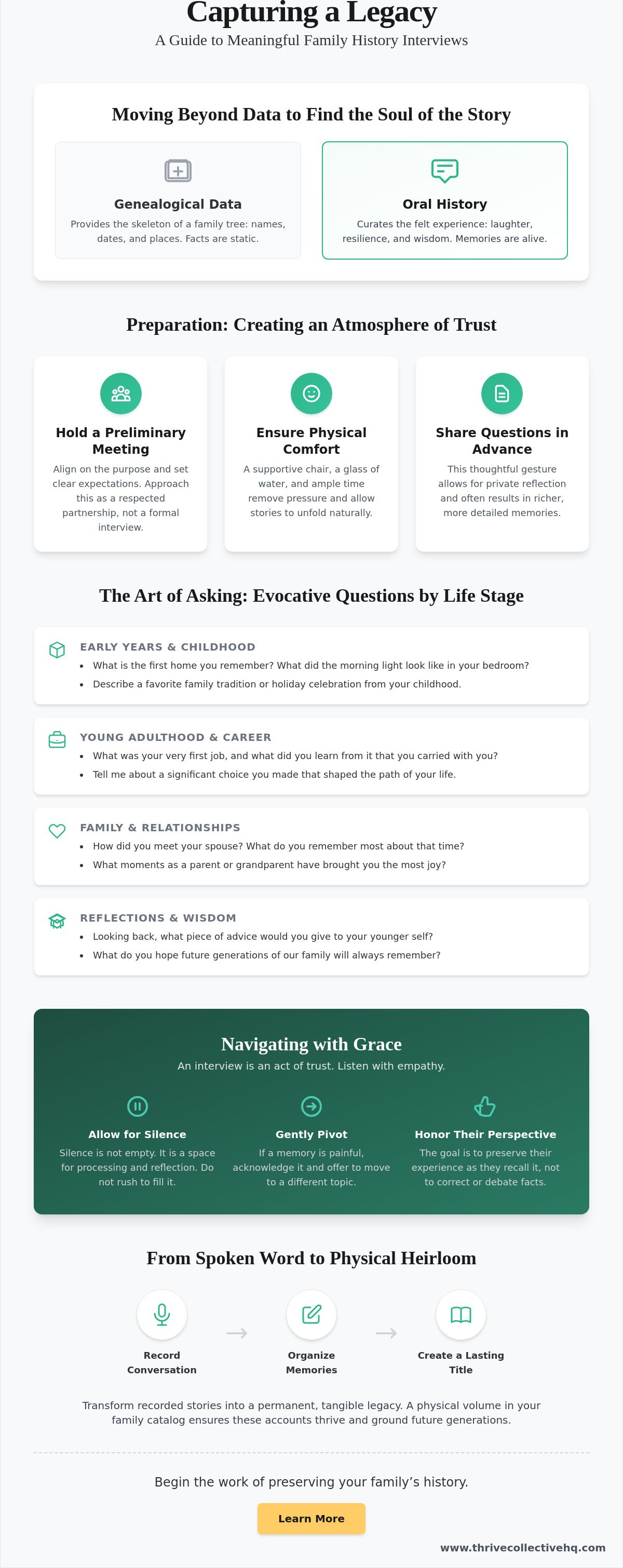
While census records provide the skeleton of a family tree, they rarely offer the soul. A date of birth tells us when a life began, but it says nothing of the laughter that filled a specific room or the quiet resilience required to weather a difficult season. This is the core reason for preparing family history interview questions for grandparents. You are not just collecting data; you are curating a felt experience that would otherwise remain locked in the private theater of memory. In our catalog, we view these accounts as essential titles that bridge the gap between generations, turning a collection of names into a living narrative.
Understanding what oral history is helps us recognize that stories are the glue of a collective. When we wait too long to document these narratives, we lose the specific nuances that make a person real to future generations. We lose the cadence of their voice, the specific metaphors they use, and the hard-won wisdom that only surfaces in unhurried conversation. By viewing these interviews as the foundation of a permanent family title, you transform fleeting moments into a lasting legacy. This intentionality ensures that your family history doesn't just survive in dusty boxes, but thrives in the hearts of those who come next.
To better understand the technical and emotional aspects of this process, watch this helpful video:
Moving beyond dates and places
Facts are static. Memories are alive. Knowing your grandfather was born in 1945 is a data point; knowing the exact scent of the woodstove in his childhood kitchen is a connection. We encourage you to look for the soul of the story. Instead of asking where someone lived, ask what the morning light looked like in their first bedroom. These sensory prompts invite a grandparent to step back into their younger self. When you use specific family history interview questions for grandparents, you move the conversation from a dry recitation of events into a vivid, cinematic experience that honors their unique path.
The role of the listener in legacy building
You are more than a passive participant in this process. You are the family editor. Your presence and intentionality provide the safety required for deep sharing. This act of deep listening fosters a profound sense of alignment and belonging, grounding you in a story much larger than your own. Engaging in this work is a significant form of personal growth. It requires patience, empathy, and a visionary's eye to see how a single conversation can impact the family collective for decades. You are building a bridge of support, ensuring that the wisdom of the past becomes the fuel for the future.
Preparing for a meaningful interview session
Preparation is the bridge between a casual chat and a documented legacy. While it's tempting to jump straight into the conversation, the atmosphere you cultivate determines the depth of the story you receive. We recommend starting with a preliminary meeting to set expectations and align your visions for the project. This isn't the formal interview; it is an opportunity to identify high-level themes and ensure your grandparents feel like respected partners in this collective endeavor. When you approach the process with this level of intentionality, you remove the pressure of performance and replace it with a sense of shared purpose.
Physical and emotional comfort are the quiet foundations of a successful session. Ensure your interviewee has a supportive chair, a clear glass of water, and plenty of time. Rushing the process risks losing the very nuances you seek to preserve. Sharing a few of your family history interview questions for grandparents a few days before you meet allows them to reflect on their experiences in private. This thoughtful gesture often leads to more vivid, descriptive passages that paint a clearer picture of their past. If you find that these conversations spark a desire to explore the complexities of maternal legacy, you may find resonance in titles like The Mother I Did Not Know, which explores the layers of identity we often miss.
Selecting a quiet and comfortable space
Background noise is a silent thief of historical detail. A ticking grandfather clock or a humming refrigerator might seem insignificant, but they can significantly obscure the softest, most poignant parts of a recording. Choose a location that evokes peace, such as a favorite garden or a sun-drenched porch. Bringing physical triggers into the space, like old photo albums or family heirlooms, can help trigger specific memories. These objects serve as visual anchors, grounding the speaker and helping them access details that might otherwise remain buried.
Technical considerations for recording
Capturing a legacy doesn't require a professional studio. A modern smartphone with a high-quality recording app is often sufficient for a clear record, though a dedicated digital recorder provides extra security and battery life. Always test your equipment before the session begins. Record a few moments of ambient sound and play it back to ensure the levels are crisp and audible. While audio is the primary goal, consider using video to capture facial expressions and hand gestures. These visual cues add a layer of humanity to the family catalog, preserving the essence of the person alongside their words.
Evocative questions to reveal a life lived
The quality of a legacy title depends entirely on the depth of the inquiry. When selecting family history interview questions for grandparents, avoid the trap of purely factual queries that result in one-word answers. Instead, prioritize open-ended prompts that start with how or why. These questions invite a narrative flow that reveals internal states and personal values rather than just a timeline of events. We recommend grouping your questions into logical life stages to create a rhythmic momentum that feels natural for both the listener and the speaker.
Childhood and the formative years
Sensory details are the keys to accessing a reader’s imagination and empathy. Ask about the specific sounds and sights of their first home, such as the smell of the garden after a rain or the specific texture of a favorite quilt. Inquire about a childhood friend who changed their perspective or what a typical Sunday afternoon felt like in 1950. These prompts encourage a grandparent to inhabit their younger self, providing the descriptive richness that makes a family catalog feel alive and resonant.
Love, work, and adulthood
Adulthood is often defined by the friction of choice and the expansion of the heart. Ask when they first felt truly independent or about the most difficult professional choice they ever made. When discussing partnership, inquire how they met their spouse and what they first noticed about them. These questions move beyond the logistics of a career or a marriage to reveal the intentionality behind their most significant life transitions, offering a clearer picture of their character and drive.
Lessons for the next generation
The final chapters of an interview should focus on alignment and the impact of a life lived. Ask what they wish they had known at age twenty and which values they hope their family continues to uphold. Inquire about what they are most proud of in their personal evolution. This is an opportunity for a grandparent to speak directly to the future, offering a visionary perspective that grounds the entire family collective in a shared sense of purpose and growth.
Trust the conversation. While a list is a helpful guide, you must be willing to follow the thread of a story wherever it leads. The most profound insights often surface in the unscripted moments between planned questions. By staying present and using these family history interview questions for grandparents as a flexible framework, you allow the soul of the story to emerge naturally, ensuring the resulting title is as authentic as the person who lived it.
Managing the nuances of difficult memories
Managing the nuances of difficult memories requires a visionary heart and an editor's discipline. While our previous sections focused on evocative prompts, we must also prepare for the weight of historical trauma or personal regret. When you utilize family history interview questions for grandparents, you are entering a vulnerable space. This work is about alignment and impact, not just information gathering. If you sense a grandparent is struggling with a memory, give them the space to pause. Silence is often as communicative as speech. By respecting these boundaries, you cultivate a deeper community of trust that allows the true legacy to thrive.
It is vital to remember that the interview is a gift, not an interrogation. You are a guest in their past. If a topic becomes too painful, offer a gentle pivot to a related but lighter theme. You might say, "We don't have to stay there if you'd rather move on." This approach ensures the session remains a supportive exchange. When handling historical events, do so with care and respect for the individual's felt experience. You aren't just recording facts; you are documenting the resilience required to live through them.
Handling family secrets with grace
Every family catalog has its unwritten pages. If a grandparent shares a sensitive story in confidence, your primary responsibility is to maintain that trust. As the family editor, you hold the power to decide what remains in the final record and what is omitted for the sake of privacy. Acknowledge the weight of the secret without prying further. If you are managing the complexities of hidden family dynamics, we recommend exploring The Mother I Did Not Know for insight into the stories we often keep from those closest to us.
The ethics of sharing personal stories
Ownership is a critical part of the legacy process. These stories belong to the grandparent first, and you are simply the medium through which they are recorded. Always seek explicit permission before including a narrative in a published family title. You may also encounter conflicting versions of the same event. In these cases, respect the speaker’s truth as their specific perspective. You don't need to reconcile every historical discrepancy; the goal is to capture the soul of their path, not to write an academic history. This intentionality ensures that your family history interview questions for grandparents lead to a record that is both honest and respectful of the collective story.
Translating spoken words into a physical heirloom
A digital file is a convenient storage method, but a physical title is a presence. While digital archives are prone to technical failure or platform shifts, a bound book sits on a shelf as a permanent witness to a life lived. Once you have used your family history interview questions for grandparents to collect these stories, the next step is the intentional work of transcription and curation. This process transforms raw audio into a readable narrative, allowing the wisdom of your elders to be passed down with clarity and weight. We believe that a physical heirloom is the most profound expression of family alignment, providing a tactile connection that digital screens cannot replicate.
The transition from recording to page requires an editor's eye. You'll need to transcribe the dialogue, perhaps utilizing automated tools for a first draft before refining the text for flow and tone. Adding scanned documents, such as birth certificates or handwritten letters, alongside family photographs creates a multi-layered experience for the reader. This curation process is an act of deep respect, ensuring every detail is preserved within your family catalog. To explore tools designed for this level of preservation, we invite you to browse our journals and keepsakes collection, which features titles crafted for longevity and beauty.
Selecting a prompted heirloom journal
For many, a guided journal is the most accessible way to bridge the gap between an interview and a finished book. These titles provide a structured framework that organizes memories into a logical progression, ensuring no significant life stage is overlooked. High-quality paper and durable binding are essential for a legacy project that is meant to last for generations. Once the journal is complete, consider hosting a small gathering or forming a family book club to discuss the stories. This creates a space for collective reflection, turning a private project into a shared community experience.
Self-publishing a family history title
If your project grows beyond the scope of a journal, you might consider self-publishing a professional title. By organizing your chapters by theme or chronology, you can create a sophisticated volume that rivals any title in a commercial catalog. Working within a multi-imprint structure allows you to choose a persona that matches the tone of the stories, whether it is literary and quiet or direct and warm. This is more than just a writing project; it is a visionary act of legacy building. You are ensuring that the answers to your family history interview questions for grandparents become a permanent part of your family’s literary history, grounding future generations in the strength of those who came before them.
Cultivating a permanent family record
The act of documenting a life is a visionary gift to the future. You have moved beyond simple data collection to capture the felt experience of your elders. By using intentional family history interview questions for grandparents, you've ensured that their unique path is honored with the depth it deserves. We've explored how a calm environment and ethical listening create the safety required for true vulnerability. Now, the final step is to ground these spoken memories in a form that will endure.
A physical title provides a sense of permanence that digital files simply cannot offer. Our catalog features heirloom quality materials and thoughtfully designed prompts curated by an independent press to support your creative work. Whether you are organizing a multi-generational series or a single volume of memories, your commitment to this project strengthens the family collective. We invite you to explore our collection of journals and keepsakes to begin your legacy project today. Your intentionality now ensures that your family’s stories will thrive for generations to come.
Frequently Asked Questions
What are some effective questions to ask grandparents about their childhood?
Sensory prompts are a productive way to reveal early memories. Ask what the morning light looked like in their first bedroom or the specific sound of the neighborhood at dusk in 1955. These family history interview questions for grandparents move beyond simple facts to capture the felt experience of their formative years. Focus on the textures of daily life, such as the smell of a specific meal or the feeling of a childhood chore.
How do I start a conversation about family history if we are not close?
Framing the conversation as a formal legacy project can bridge the emotional gap between distant relatives. Invite them to contribute to a collective family catalog rather than asking for personal intimacy immediately. This approach provides a clear purpose and structure, making the interaction feel like a shared mission. You'll often find that the process of documenting history naturally fosters a new sense of alignment and connection over time.
Should I record the interview or just take notes?
We recommend recording the audio while taking brief, high-level notes for reference. Recording preserves the specific cadence of their voice and the nuances of their storytelling that a written transcript might miss. Notes help you track the thread of the conversation and identify themes for later editing. This dual approach ensures you have a reliable record for your final title without missing the emotional depth of the moment.
What if my grandparent cannot remember specific details?
Visual anchors like old photographs or physical heirlooms can often trigger memories that words alone cannot reach. If a grandparent cannot remember a specific date or name, don't press for accuracy. The goal of using family history interview questions for grandparents is to capture their perspective and emotional truth rather than a perfect historical record. Focus on what they do remember, as those fragments often hold the most significant meaning.
How can I organize the information I gather into a book?
Organizing your gathered information by theme or chronology allows you to create a professional family title. Group stories into life stages, such as childhood, professional growth, and lessons learned, to create a rhythmic flow for the reader. You can then use an independent press or a multi-imprint structure to produce a bound volume. This transforms a collection of transcripts into a permanent heirloom for your family catalog.
What are some creative ways to preserve family stories besides a journal?
Preserving family stories can take many forms beyond a standard journal, including digital audiobooks or a curated collection of scanned letters. You might create a series of short audio clips paired with digital photo albums for a multi-media experience. Another visionary option is to design a custom travel guide that follows the locations mentioned in their stories. These creative formats ensure the legacy remains accessible and engaging for younger generations.
How long should a family history interview session last?
A typical family history interview session should last between sixty and ninety minutes to respect the physical comfort of your grandparent. Rushing the process risks losing nuance, but sessions that go too long can lead to fatigue for both the speaker and the listener. It is better to schedule multiple short sessions over several weeks. This rhythmic approach keeps the energy high and allows for deeper reflection between meetings.
Is it okay to ask about difficult or traumatic family events?
You may ask about difficult family events, but you must do so with extreme care and respect for the grandparent's right to silence. The ethics of memory dictate that the speaker always maintains ownership of their story. If a topic feels too painful, gently pivot to a different theme to maintain a supportive environment. Always seek explicit permission before including sensitive narratives in any published family title or heirloom.

Article by
Kimberly Cordova
Kimberly Cordova is the founder of Thrive Collective, an independent publishing brand based in Santa Fe, New Mexico. She's the author of more than 200 books across business, AI and automation, leadership, emotional intelligence, true crime, travel, guided journaling, and personal growth, published in paperback, hardcover, Kindle, and Audible audiobook formats.Kimberly writes for readers who want clear thinking, useful frameworks, and books they actually finish. Her work spans practical guides for entrepreneurs navigating AI and online business, deep-dive leadership books for women and modern managers, atmospheric true crime stories pulled from America's forgotten past, and guided journals that help readers slow down, reflect, and capture what matters.Before turning her full attention to publishing, Kimberly spent more than two decades in strategy, operations, and program leadership, working with public agencies and private organizations on transformation, technology, and large-scale change. That operator's lens shows up in everything she writes: real frameworks, real numbers, and no fluff.She lives in Santa Fe with her husband Greg, a self-taught silversmith and lapidary artist. When she's not writing, she's researching the next Shadows of the Past story, building Wildflower (her artisan turquoise jewelry brand with Greg), or curating the next round of Just Write Collection journals.Thrive Collective publishes regularly across its core series, including the AI and Automation Blueprint, The Growth Leader Collection, Shadows of the Past, The Heirloom Series, The Art of Manifestation, the Just Write Collection, and Travel: Destination Guides.Connect with Kimberly and Thrive Collective at thrivecollectivehq.com.