

The era of true crime as mere spectacle is fading, replaced by a profound hunger for the systemic truths behind the headlines. You likely feel the fatigue of scrolling through sensationalized accounts that prioritize shock value over the dignity of those involved. It's difficult to find narratives that honor historical context while maintaining investigative rigor. To help you find substance in a crowded market, Thrive Collective Publishing has curated an editorial review of The 10 Best True Crime Books of 2026: Investigative Nonfiction Highlights. The best true crime books of 2026 prioritize ethical transparency and systemic analysis over gore. These titles use archival research to challenge long-standing narratives, moving the genre toward a more respectful, historically grounded future for readers and authors alike.
We believe your reading choices should reflect your values, your curiosity, and your desire for growth. This selection moves beyond the simple question of who committed a crime to explore the complex cultural and social structures that allowed these events to occur. You will discover high-quality titles for your 2026 reading list and gain a deeper understanding of how modern investigative nonfiction is evolving to serve a more conscious community. This overview highlights the most significant releases that favor archival depth over easy answers, ensuring your library remains a place of both insight and integrity.
Key Takeaways
- Identify the 2026 shift toward systemic investigations that prioritize restorative justice and primary source research over sensationalism.
- Analyze how modern forensic evidence and legal collapses define current investigative nonfiction, including titles by authors Valerie Bauerlein and James Patterson.
- Examine the resurgence of historical true crime and the role of archival rigor in documenting the complex narratives of the American Southwest.
- Recognize the growing influence of independent boutique publishers in providing authors the editorial freedom needed for deep-dive investigative work.
- Access a curated editorial selection of The 10 Best True Crime Books of 2026: Investigative Nonfiction Highlights to ensure your personal catalog reflects ethical reporting and historical depth.
The Evolution of Investigative Nonfiction in 2026
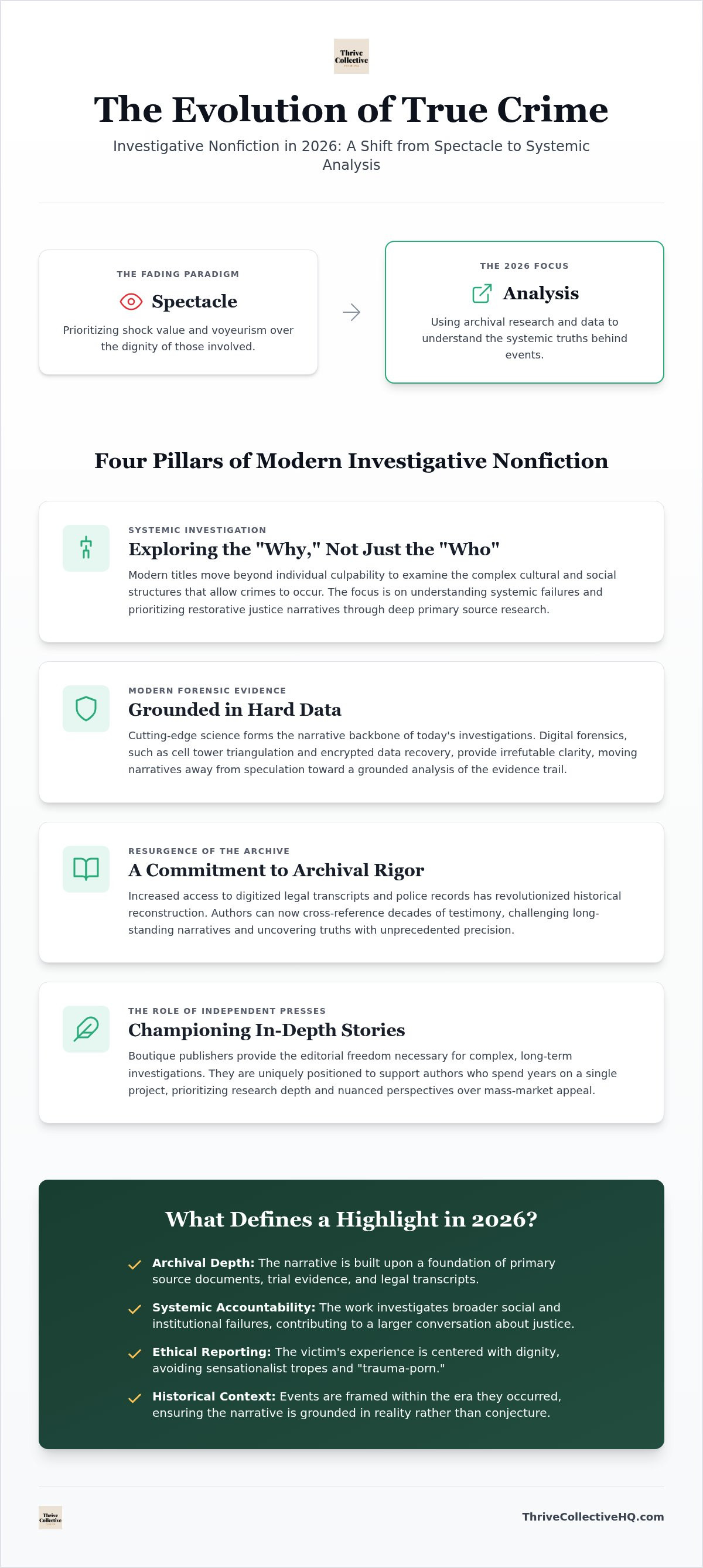
The true crime genre is shedding its reputation for voyeurism and stepping into a space of profound accountability. In 2026, the shift away from "trauma-porn" toward restorative justice narratives is no longer a niche preference but a standard for high-quality titles. You likely recognize the difference between a book that exploits pain and one that seeks to understand it. Readers are seeking out investigative nonfiction that prioritizes primary source research over speculation. This sub-genre focuses on the "why" rather than just the "who," examining the systemic failures that often precede a crime. It's about finding alignment between the facts of a case and the broader human experience.
Archival access has revolutionized how authors reconstruct historical events. With more legal transcripts and police records digitized, investigators can now piece together narratives with a level of precision that was once impossible. This rigor is essential for any title included in The 10 Best True Crime Books of 2026: Investigative Nonfiction Highlights. Authors are no longer limited by geographic barriers or closed courthouse doors. Instead, they can cross-reference decades of testimony to find the truth hidden in the margins. Independent publishing, led by houses like Thrive Collective Publishing, has become the vanguard of this movement. We offer a catalog of titles that might be considered too research-heavy for the big corporate houses, seeing this as an opportunity for personal and community evolution through shared knowledge.
What defines a highlight in 2026 investigative nonfiction?
Investigative nonfiction in 2026 is defined by its commitment to archival depth and systemic accountability, (rather than mere shock value), ensuring that every title contributes to a broader understanding of legal and social history.
This standard requires authors to use trial evidence and legal transcripts as the core narrative pillars. We look for titles that center the victim's experience without falling into sensationalist tropes. By focusing on the facts of the case and the context of the era, authors create a legacy of truth that honors the community involved. This methodical approach ensures that the narrative remains grounded in reality rather than conjecture.
The role of the independent press in genre curation
Independent presses are uniquely positioned to support authors who spend years, or even decades, on a single investigation. Boutique houses have the editorial freedom to champion complex, nuanced stories that challenge the status quo. We prioritize titles that offer significant research depth and a unique perspective on the human condition. You can explore our commitment to these high-standard narratives by visiting the Thrive Collective Publishing collections, where every title is chosen for its potential to make a lasting impact on the literary landscape.
High-Profile Legal Collapses and Modern Forensics
Modern investigative nonfiction often hinges on the intersection of ancient human motivations and cutting-edge science. In 2026, the most prominent titles in the industry demonstrate how forensic precision can dismantle even the most entrenched legal dynasties. You likely recognize that justice today requires more than just a witness statement; it requires a digital and biological trail that is nearly impossible to refute. This shift in evidentiary standards has fundamentally changed how authors structure their narratives, moving away from speculation toward a grounded analysis of hard data. As you explore The 10 Best True Crime Books of 2026: Investigative Nonfiction Highlights, you will see how these technical advancements provide the clarity modern readers demand.
The "CSI effect" continues to influence how the public perceives the legal system, creating a high bar for prosecutorial success. In 2026, authors are responding by using digital forensics, such as cell tower triangulation and encrypted data recovery, as primary narrative devices. These elements aren't just background details; they are the pillars upon which the entire case rests. We find that the most impactful titles are those that bridge the gap between technical complexity and the human stories at the heart of the investigation.
The Murdaugh legacy and the collapse of a legal dynasty
Valerie Bauerlein's account of the Murdaugh family downfall in The Devil at His Elbow serves as a masterclass in forensic accounting. She doesn't just look at the physical evidence; she examines the ledgers that reveal a century of unchecked power and financial manipulation. By analyzing thousands of pages of banking records, Bauerlein shows how the collapse of this legal dynasty was inevitable once the financial facade began to crumble. This title highlights the ethical implications of reporting on active legal fallout, ensuring that the narrative remains focused on systemic accountability rather than mere spectacle. You can find similar titles that prioritize this level of archival depth within our curated book collection.
Forensic breakthroughs in the Idaho Four investigation
James Patterson's deep dive in The Idaho Four focuses heavily on the role of genetic genealogy in modern criminal investigations. This case became a focal point in 2026 for its use of public DNA databases to narrow a list of suspects, a technique that changed the trajectory of the entire narrative. Patterson balances the public's interest in these forensic breakthroughs with a profound respect for the privacy of the victims' families. The book illustrates how genetic evidence has become a cornerstone of investigative highlights, providing a level of certainty that previous generations of investigators could only imagine. It's a reminder that every digital or biological footprint tells a story that eventually comes to light.
Historical True Crime and the Resurgence of the Archive
Historical true crime is experiencing a renaissance in 2026, driven by a collective desire to unearth the roots of our legal system. You likely feel that understanding the past is essential for navigating the complexities of the present. This year, the most significant titles in the genre move beyond folklore to provide rigorous, archive-driven accounts of justice in the American West. As we curate The 10 Best True Crime Books of 2026: Investigative Nonfiction Highlights, we find that the most impactful historical works are those that treat the archive as a living, breathing entity. These narratives allow us to see the intentionality behind early law enforcement and the lasting impact of frontier justice on our modern community.
The Southwest remains a focal point for this resurgence, serving as a fertile ground for investigative authors who seek to reconcile regional history with criminal justice. Tom Clavin's Bandit Heaven is a standout example in the 2026 landscape, offering a meticulous look at the outlaw era through the lens of primary source research. By examining the intersection of frontier lawlessness and early judicial structures, Clavin provides a narrative that is both historically careful and deeply relevant to modern readers. It's a reminder that the challenges of the past often mirror the systemic issues we face today, requiring a visionary approach to storytelling that honors the truth of the land.
Archival research as a narrative tool
In the Shadows of the Past series, author Eliza Hawthorne demonstrates how archival rigor can breathe life into forgotten cases. She utilizes primary sources, such as handwritten sheriff's logs and Gilded Age trial transcripts, to reconstruct mysteries that have long been obscured by time. Finding accurate records from the mid-century or the frontier era presents a unique challenge, but it's one that Hawthorne meets with intentionality and respect for the truth. You can explore this commitment to historical depth in the Shadows of the Past complete collection, which serves as a hallmark of our catalog's focus on substance over sensationalism.
The Southwest in the true crime catalog
New Mexico continues to be a central character in the world of historical investigative nonfiction. The state's complex history offers a unique backdrop for exploring how legal standards have evolved over centuries. For those interested in the cultural landscape that shapes these narratives, we recommend exploring our travel and place collection to gain a deeper context for the region. By grounding these criminal accounts in their specific geographical and social settings, authors like Tom Clavin ensure that their work contributes to a lasting legacy of regional truth. These titles remind us that the past is never truly gone; it's simply waiting for a careful investigator to bring it back into alignment with our current understanding of justice.
Why Independent Presses are Redefining the Genre
The publishing landscape is shifting toward boutique houses that prioritize deep-dive investigative titles over mass-market appeal. You've likely noticed that the most impactful stories often come from smaller, more agile presses that value research integrity above all else. While the Big Five publishers often focus on high-volume sales, independent presses have the editorial freedom to champion complex narratives that require years of dedication from their authors. This is why our catalog at Thrive Collective Publishing focuses on substance over sensationalism. Every title we select for The 10 Best True Crime Books of 2026: Investigative Nonfiction Highlights reflects a commitment to the truth that goes beyond a simple marketing hook. We believe that by supporting these diverse investigative voices, we are helping you cultivate a library that truly matters.
Curation over commercialism
In an era dominated by algorithmic recommendations, the human curator's voice is more important than ever. A marketing-led list tells you what is popular; an editorial highlight selection tells you what is significant for your personal growth and understanding. We believe that independent authors benefit from a closer, more intentional relationship with their publisher. This partnership allows for a level of detail and archival rigor that often gets lost in larger corporate structures. This collaborative spirit ensures that every book is a legacy piece, contributing to a collective understanding of justice. If you are an investigator dedicated to this level of craft, we invite you to review the Thrive Publishing guidelines for serious investigative work.
The ethics of true crime in 2026
The responsibility of the publisher has evolved to include a strict mandate for factual accuracy and victim respect. Independent houses are leading the way in ethical true crime reporting by rejecting the exploitative patterns of previous decades. We choose titles that offer a legacy of understanding rather than a moment of shock. This philosophy of "substance over sensationalism" ensures that our readers can trust the information they consume as they seek alignment with the truth. It's about creating a community where success is measured by the impact of the narrative rather than just the volume of sales. This ethical alignment is what defines the most important investigative nonfiction of the year, ensuring these works remain among The 10 Best True Crime Books of 2026: Investigative Nonfiction Highlights.
Curating Your 2026 True Crime Library
Building a library that reflects your commitment to systemic truth requires a discerning eye for archival depth. You likely want a collection that goes beyond the surface to explore the complex motivations and legal structures of our time. This final selection for The 10 Best True Crime Books of 2026: Investigative Nonfiction Highlights represents the pinnacle of ethical reporting and narrative rigor. These titles have been chosen for their ability to challenge assumptions and provide a lasting legacy of understanding for every reader who values substance over sensationalism. By gathering these works, you are not just buying books; you are investing in a community of authors dedicated to the pursuit of justice.
The Top 10 investigative highlights of 2026
- 1. The Idaho Four by James Patterson and Vicky Ward
- 2. The Devil at His Elbow by Valerie Bauerlein
- 3. The Mother I Did Not Know by K.B. Cordova
- 4. Bandit Heaven by Tom Clavin
- 5. American Reich by Eric Lichtblau
- 6. Framed by John Grisham
- 7. Only God Can Judge Me by Jeff Pearlman
- 8. I’ll Never Call Him Dad Again by Caroline Darian
- 9. Captain’s Dinner by Adam Cohen
- 10. Brothers of the Gun by Mark Lee Gardner
Among these significant works, we want to specifically highlight The Mother I Did Not Know by K.B. Cordova. This investigative memoir stands as a testament to the power of personal evolution through the uncovering of hidden truths. It balances literary grace with a quiet, persistent search for identity and archival clarity. It is a title that invites reflection, asking you to consider how the secrets of the past shape the reality of your present. For readers who appreciate a narrative that is both deeply personal and rigorously researched, this title is a necessary addition to your 2026 catalog.
Building a balanced catalog of titles
A balanced library includes a variety of formats, from the tactile weight of a hardcover to the portability of a Kindle ebook. Supporting the publishing ecosystem means making intentional choices about how and where you acquire your titles. When you choose to purchase direct from our catalog, you ensure that your support directly reaches the authors and the independent presses that champion their work. This practice cultivates a community where serious investigative voices can continue to thrive without the pressure of mass-market trends. It allows us to maintain our focus on archival integrity and ethical reporting standards.
The titles defining 2026 move the true crime genre toward a more respectful and historically grounded future. By prioritizing archival rigor and systemic analysis, these authors provide the context necessary for a deeper understanding of our legal and social history. These 10 Best True Crime Books of 2026: Investigative Nonfiction Highlights serve as a roadmap for any reader seeking alignment with the truth. If you have questions about our upcoming releases or wish to discuss a specific title in our catalog, please reach out to our team at info@thrivecollectivehq.com.
Cultivating a Legacy of Truth in Your Library
The 2026 landscape of investigative nonfiction represents a significant shift toward systemic accountability and archival depth. You've seen how modern forensics and historical rigor can dismantle long-standing myths, replacing them with a more nuanced understanding of justice. By prioritizing titles that avoid sensationalism, you align your reading habits with a more ethical and respectful approach to reporting. This curated selection of The 10 Best True Crime Books of 2026: Investigative Nonfiction Highlights provides a foundation for building a catalog that honors the complexity of every case.
We're here to support you as you refine your collection and seek out stories that resonate with your sense of purpose. Your dedication to the truth is what makes this collective effort possible.
Frequently Asked Questions
What is the best true crime book of 2026 for fans of historical research?
Tom Clavin's Bandit Heaven is the premier choice for historical research in 2026. It utilizes primary sources to reconstruct the Wild West outlaw era with archival precision, moving beyond simple folklore. You'll find it offers a deeper context than standard narratives by focusing on the intersection of frontier lawlessness and early judicial structures. It's a standout title for those who value historical accuracy and careful investigation.
Are there any new releases in 2026 focused on the Idaho college murders?
James Patterson and Vicky Ward released The Idaho Four in 2026, which focuses heavily on modern forensic evidence and trial transcripts. The title examines the role of genetic genealogy and the technical breakthroughs that defined the investigation. It's a key highlight in the 2026 investigative landscape, providing a detailed look at the forensic trail that led to the suspect's arrest while respecting the victims' families.
How do independent publishers like Thrive Collective Publishing select their true crime titles?
Thrive Collective Publishing selects titles based on research integrity and archival depth rather than mass-market commercial trends. We prioritize authors who spend years investigating systemic failures or forgotten cases, ensuring every book offers a legacy of understanding. Every title in our catalog must align with our commitment to substance over sensationalism, reflecting a curator's voice that trusts the reader's intelligence and desire for genuine insight.
What defines investigative nonfiction compared to standard true crime?
Investigative nonfiction prioritizes primary source research and systemic analysis over mere shock value or voyeurism. While standard true crime often focuses on the "who" of a crime, investigative titles examine the "why," looking closely at social, financial, and legal structures. This methodical approach defines The 10 Best True Crime Books of 2026: Investigative Nonfiction Highlights, ensuring each narrative contributes to a broader understanding of history and justice.
Which 2026 true crime books focus on legal collapses and trial evidence?
Valerie Bauerlein's The Devil at His Elbow and John Grisham's Framed are the top 2026 picks for those interested in legal analysis. Bauerlein analyzes thousands of pages of financial records in the Murdaugh downfall, while Grisham uses trial transcripts to investigate potential wrongful convictions. Both titles rely on hard evidence and legal documentation rather than conjecture, providing a serious look at how the American legal system functions under pressure.
Is The Mother I Did Not Know based on a true story?
Yes, The Mother I Did Not Know by K.B. Cordova is a serious investigative memoir based on the author's search for her personal and family history. It utilizes archival research and direct interviews to reconstruct a forgotten narrative with literary grace. The book is a core example of how personal investigation can uncover systemic truths, making it a necessary addition for readers who appreciate psychological and investigative depth.
Where can I find a curated catalog of historical true crime titles?
You can find a curated catalog of historical and investigative titles on our official website within the books collection. We focus on boutique curation that highlights archival rigor and ethical reporting standards, avoiding the algorithmic noise of larger retailers. Supporting independent presses directly helps maintain a healthy ecosystem for authors who dedicate their careers to deep-dive investigative work and serious historical research.
Why is New Mexico a prominent setting in 2026 true crime highlights?
New Mexico provides a rich setting for 2026 highlights due to its complex frontier history and well-preserved judicial archives. The state's unique intersection of regional law and cultural history offers fertile ground for authors like Eliza Hawthorne to explore forgotten mysteries. Our New Mexico base allows us to support titles that investigate these deep regional roots, ensuring the past remains in alignment with our current understanding of justice.

Article by
Kimberly Cordova
Kimberly Burk Cordova is the founder of Thrive Collective Publishing, an independent multi-imprint publishing house based in Santa Fe, New Mexico. She is the author of books on leadership, business growth, AI and automation, emotional intelligence, and personal development, written for readers who want clear thinking, useful frameworks, and books they actually finish.
Before turning her full attention to publishing, Kimberly spent more than two decades in strategy, operations, and program leadership, working with public agencies and private organizations on transformation, technology, and large-scale change. That operator's lens shows up in everything she writes and publishes: real frameworks, real numbers, no fluff.
As publisher, she leads a catalog of more than 80 titles from six authors across multiple imprints, spanning literary suspense, true crime, children's biography, relationships, travel, guided journals, and coloring books. The house publishes regularly across its core series, including The Casita Series, Shadows of the Past, the Young Legends Collection, The Growth Leader Collection, the AI and Automation Blueprint, The Heirloom Series, The Art of Manifestation, the Just Write Collection, and Travel: Destination Guides.
She lives in Santa Fe with her husband Greg, a self-taught silversmith and lapidary artist. When she is not writing or publishing, she is building Wildflower Artisans, their Turquoise jewelry brand, or curating the next round of Just Write journals.
Connect with Kimberly and Thrive Collective Publishing at thrivecollectivehq.com.