

The most expensive bottleneck in a scaling business is rarely a broken system; it is often the leader's own emotional state. We agree that the transition from founder to visionary is fraught with hidden challenges, from managing complex team dynamics to regulating your own energy during market shifts. At Thrive Collective Publishing: Books, Journals, and Guides, we believe that your professional legacy is inseparable from your personal evolution. This article provides a thoughtful selection of books on emotional intelligence for leaders designed to help you move through this expansion with grace and intentionality.
Scaling is a human endeavor. We promise to offer actionable strategies for building self-awareness and cultivating a high-retention culture that reflects your deepest values. You will discover how specific titles can serve as a mirror for your leadership habits and help you scale with ease. We will preview the role of EQ in the entrepreneurial transition and how a structured reading curriculum can turn your library into a powerful catalyst for growth.
Key Takeaways
- Understand the vital shift from individual execution to team empowerment through the lens of emotional maturity.
- Explore a curated selection of books on emotional intelligence for leaders designed to deepen your self-awareness and personal growth.
- Learn how to cultivate a resilient team culture by applying the principles of social awareness and collective alignment.
- Create a practical leadership curriculum that addresses your unique scaling challenges without falling into the trap of passive reading.
- See how aligning your personal development with your business goals creates a lasting legacy for your community.
The Role of Emotional Intelligence in the Entrepreneurial Transition
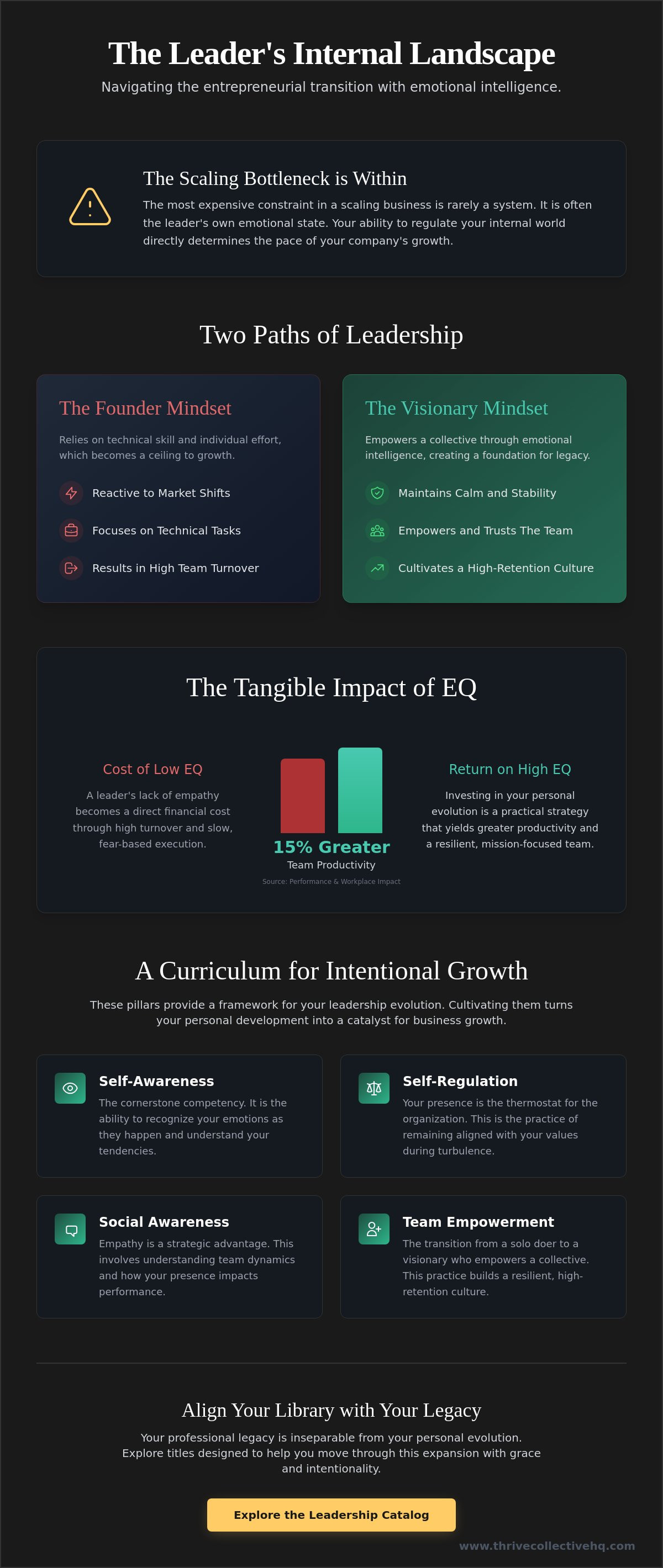
The transition from founder to leader is rarely a matter of acquiring more technical knowledge. It is a shift in the internal landscape. We see many entrepreneurs reach a ceiling because they rely on the same grit that launched the business, yet scaling requires a move toward Emotional Intelligence. This serves as the primary differentiator for those who want to build a lasting legacy. It is about moving from the role of a solo doer to the role of a visionary who empowers a collective. When you lead with intentionality, your presence becomes the thermostat for the entire organization.
To better understand this concept, watch this helpful video from Daniel Goleman:
Leadership is a reflective practice. It is not a list of management tactics to be deployed. When market shifts occur, a leader with high EQ maintains alignment with their core values. They remain calm. This stability allows the entire team to focus on growth rather than fear. You might find that your technical expertise, while foundational, is no longer the most valuable asset you bring to the table. Instead, your ability to regulate your own emotional state determines the speed at which your business can scale.
From Founder to Visionary Leader
There is a specific moment in every business when your ability to manage people outweighs your ability to perform the technical task. This is the transition to visionary leadership. High self-regulation ensures that a culture of overworking does not trickle down from the top. By prioritizing your own emotional health, you set a standard that allows your team to thrive. We often recommend specific books on emotional intelligence for leaders to help navigate this delicate shift. These titles help you focus on the long-term impact of your leadership style on your company legacy.
The Cost of Low Emotional Intelligence
The price of poor self-awareness is often hidden in your balance sheet. High team turnover is a common symptom of a leader who hasn't mastered their internal world. Leaders with stronger emotional intelligence consistently get more out of their teams. Technical brilliance cannot compensate for a lack of empathy in small, agile teams. If a leader is reactive, the business scales slowly because the team is busy managing the leader's moods instead of the mission. Investing in your personal evolution is the most practical business strategy you can employ.
Foundational Titles for Cultivating Self-Awareness
Self-awareness is the cornerstone of every other leadership competency. It is the ability to recognize your own emotions as they happen and understand your tendencies in various situations. Without this root, management tactics are merely performative. We believe that the most effective books on emotional intelligence for leaders act as a mirror rather than a manual. They invite you to look at your leadership habits with honesty. This process requires more than passive consumption; it demands intentional reflection to ensure the concepts truly take root in your daily operations. Understanding the importance of emotional intelligence in leadership is the first step toward scaling with ease.
The Emotional Intelligence Advantage
Our title, The Emotional Intelligence Advantage, provides a structured framework for identifying your specific emotional triggers. In a competitive market, empathy is a strategic advantage. This title helps you align your professional development goals with your internal growth. By understanding how your responses impact team dynamics, you can lead with greater intentionality. Sometimes, deep self-awareness also requires exploring the complicated layers of empathy and family, as seen in narratives of personal discovery.
Classic Perspectives from Daniel Goleman
Daniel Goleman remains a staple in our catalog for a reason. His work highlights the four domains of EQ: self-awareness, self-management, social awareness, and relationship management. The 25th-anniversary edition of his primary work, published in 2020 (available in paperback for approximately $17.55), includes a new introduction that remains highly relevant. These concepts are vital for the modern entrepreneurial landscape. Statistics from TalentSmart show that 90 percent of top performers have high emotional intelligence, which underscores the necessity of these foundational reads.
Selecting titles that challenge your current perspective on power is vital for growth. Influence comes from emotional resonance, not just authority. We suggest keeping a journal nearby as you read these titles. Write down the moments where you feel defensive. Those are usually the areas where your greatest personal evolution is waiting to happen. By pairing these insights with your existing technical skills, you create a leadership style that is both effective and sustainable.
Books for Building Resilient Teams and Aligned Cultures
Leadership is not a solo act. It is a collective endeavor that requires a high degree of social awareness. While self-awareness is the root of your growth, social awareness is the branch that reaches out to support your team. We believe that the most effective books on emotional intelligence for leaders focus heavily on this external application. This is particularly vital when you consider that Gallup reports only 23 percent of employees are engaged at work globally. Resilience in a business is about building a culture where honest communication and shared values are the default setting. Your role as a leader is to cultivate an environment where every member of your collective can thrive.
Leading with Intentionality and Empathy
Using literature to understand diverse perspectives is a powerful way to expand your empathy. When you read titles that explore different lived experiences, you develop a more nuanced understanding of your own team members. Vulnerability is a key component here. In a small group setting, a leader who admits they don't have all the answers builds immediate trust. For example, during a difficult project pivot, an empathy-led leader might acknowledge the team's shared frustration before asking for input on the next steps. This approach resolves conflict by validating emotions rather than dismissing them. It turns a business challenge into an opportunity for personal evolution.
The Procrastination Cure for Teams
Team-wide delays and resistance often have emotional roots. It is rarely about a lack of skill and more often about a lack of alignment or a fear of failure. A leader with high EQ recognizes these patterns early. They understand that a team stuck in a cycle of dreaming without doing is usually a team that lacks psychological safety. By addressing the underlying anxiety, you can help your collective move forward with confidence. Titles like The Procrastination Cure serve as vital resources for moving toward aligned action and scaling with ease.
Building a resilient culture is a continuous process. It requires you to stay present and attentive to the shifting needs of your people. When you prioritize social awareness, you move beyond mere management and into the space of true visionary leadership. By engaging with our curated books on emotional intelligence for leaders, you are making a commitment to the health of your entire organization. This creates a legacy of impact that extends far beyond your financial success and fosters a community of shared purpose.
Designing Your Personal Leadership Curriculum
Collecting books on emotional intelligence for leaders is a noble starting point, but their true value is only realized when you integrate them into your daily practice. We often see entrepreneurs fall into the habit of "shelf-help," where insightful titles gather dust while the same leadership frustrations persist. To avoid this, we suggest creating a structured reading plan that honors your current business season. Limit your focus to one core leadership competency every ninety days. This pace allows the concepts to move from passive consumption to active, embodied growth. It is the difference between simply knowing a theory and actually living it within your collective.
Choosing Your Next Title
Matching your reading to your specific business challenge ensures that every page serves a purpose. If you are a founder currently struggling with burnout, your curriculum should prioritize titles on resilience and self-management. For those leading rapidly growing teams, we recommend focusing on empathy and social awareness to maintain team cohesion. Visionaries who are beginning to think about their long-term legacy should look for works that emphasize intentionality and impact. This targeted approach prevents overwhelm and keeps your personal evolution aligned with your professional demands. It turns your library into a practical toolkit for scaling with ease.
The Power of the Guided Journal
A blank page is often the most effective teacher for a developing leader. Reading provides the framework, but reflection provides the root. By using our Journals and Keepsakes collection, you can document your evolution in real time. We find that a rhythmic practice of daily reflection helps to solidify leadership lessons that might otherwise be forgotten in the rush of a workday. Writing down your reactions to specific chapters allows you to identify patterns in your own thinking and behavior. This is how you move from a state of dreaming to a state of doing.
This process of self-discovery is rarely linear. It requires a willingness to look back even as you move forward. Sometimes, the most profound leadership growth comes from examining the emotional complexities of our own histories and relationships. You can explore these themes of personal discovery and empathy in The Mother I Did Not Know. By pairing deep reading with consistent journaling, you ensure that your leadership style remains grounded, authentic, and deeply connected to your core values.
Cultivating Your Library with Thrive Publishing
Thrive Collective Publishing: Books, Journals, and Guides functions as more than a traditional press. We serve as a hub for conscious entrepreneurs who view their business as a vehicle for personal evolution. Every title in our catalog is selected with the understanding that a leader's impact is directly tied to their internal growth. We support authors who bring a visionary perspective to leadership, ensuring that our readers have access to the most thoughtful books on emotional intelligence for leaders available today. Joining our collective means committing to a higher standard of professional and personal integrity. Success is never a solo endeavor.
The Leadership and Growth Collection
Within our Leadership and Growth collection, you will find titles specifically selected for the entrepreneurial path. A central work in this series is The Emotional Intelligence Advantage, which offers a practical framework for self-regulation and team alignment. Our imprints and series are designed to match the unique personas of modern leaders. The operator-direct warmth of Kimberly Burk Cordova provides immediate clarity for those in the thick of scaling. In contrast, the literary and quiet voice of K.B. Cordova offers a space for deeper, more contemplative reflection. This diversity ensures that every reader finds a mentor's voice that resonates with their specific stage of growth. We maintain strict editorial standards, favoring clarity and substance over trends. We prioritize titles that challenge the status quo of corporate communication, focusing on the intersection of strategic scaling and soulful ambition.
Taking the Next Step in Your Evolution
True growth requires you to move beyond reading and start your own reflective practice. We invite you to view your library as a living curriculum for your success, building upon the quarterly focus we discussed previously. You can explore our full Business and Entrepreneurship catalog to find resources that support both your strategic goals and your emotional well-being. If you are looking for specific books on emotional intelligence for leaders to address a current challenge, our team is available to help. You can contact us at info@thrivecollectivehq.com for personalized title recommendations tailored to your visionary path. We believe that the right book at the right time can change the trajectory of a business, fostering a community of shared purpose and inevitable progress.
Scaling a business with ease is a collective effort. It begins with the individual leader but thrives through the strength of the community. We are honored to be a part of your story as you build a legacy of intentionality and purpose. Your evolution is our mission.
Leading Toward a Visionary Legacy
The shift from a founder who manages tasks to a visionary who empowers a team is the most significant evolution you'll face in your entrepreneurial career. We've explored how self-awareness acts as the root of your leadership, while social awareness allows your collective to flourish. By curating a personal curriculum from our catalog, you move beyond passive reading into a state of intentional growth. Our independent press uses a curator's eye to select titles designed for deep personal evolution and professional alignment.
Whether you're addressing the complexities of empathy or the demands of scaling a business, these books on emotional intelligence for leaders provide the mirror you need to refine your presence. We invite you to explore our curated catalog of leadership and growth titles to begin your next chapter of self-discovery. Your business cannot outgrow your own awareness, but with the right resources, you can lead with a sense of alignment that creates a lasting impact. You have the potential to build a legacy that matters, and we're here to support that growth.
Frequently Asked Questions
What is the most effective title for a founder new to emotional intelligence?
Daniel Goleman’s "Emotional Intelligence: Why It Can Matter More Than IQ" remains the standard starting point for any leader. We often suggest the 25th-anniversary edition, published in 2020, because it includes a new introduction that addresses modern workplace challenges. For those seeking a highly practical framework, "Emotional Intelligence 2.0" by Bradberry and Greaves offers a structured approach to testing and tracking your current EQ levels as you grow.
Can reading books actually improve my EQ as a leader?
Reading provides the necessary cognitive framework, but true improvement requires active implementation and reflection. The leaders who advance furthest are usually the ones who did this work deliberately rather than waiting for experience to teach it. By engaging with books on emotional intelligence for leaders and practicing the self-regulation techniques they suggest, you can rewire your habitual responses to team conflict and market stress.
How can I find time to read leadership titles while running a business?
We recommend integrating different formats into your existing daily schedule to maintain consistency. You might listen to an Audible audiobook during your morning commute or keep a Kindle ebook on your phone for brief moments between meetings. Focusing on one specific title per quarter, as we discussed in our curriculum section, prevents the overwhelm of a long reading list and allows for deeper integration of the material into your collective.
Are there specific titles for female entrepreneurs focused on EQ?
Our imprints, such as Kimberly Burk Cordova and Noelle Varden, offer grounded perspectives that resonate with the unique challenges of female leadership. These titles often focus on the intersection of self-respect, empathy, and professional boundaries. They help you lead with a blend of authority and encouragement that feels authentic to your personal values and long-term legacy goals.
Should I read these titles alone or with my leadership team?
Beginning with a solo reading allows you to process your own emotional triggers without the pressure of a group setting. Once you feel comfortable with the concepts, sharing a title with your team can create a shared vocabulary for managing dynamics. Using our "Just Write Collection" journals during team book clubs can help facilitate these deeper conversations and improve overall engagement.
What is the difference between management books and EQ books for leaders?
Management books generally focus on external systems, such as logistics, workflows, and technical strategies. In contrast, books on emotional intelligence for leaders focus on the internal landscape of the individual. They address how your emotional state influences your decision-making and how your empathy directly impacts team retention and company culture.
How can I apply the lessons from these titles to my daily work routine?
Start by identifying one specific emotional trigger you encounter during your workday, such as a difficult client call or a missed deadline. Use the strategies from your current reading to pause and choose a response rather than reacting impulsively. Consistent daily reflection in a legacy journal helps you track these small shifts in behavior, which eventually lead to a more visionary and aligned leadership style.

Article by
Kimberly Cordova
Kimberly Cordova is the founder of Thrive Collective, an independent publishing brand based in Santa Fe, New Mexico. She's the author of more than 200 books across business, AI and automation, leadership, emotional intelligence, true crime, travel, guided journaling, and personal growth, published in paperback, hardcover, Kindle, and Audible audiobook formats.Kimberly writes for readers who want clear thinking, useful frameworks, and books they actually finish. Her work spans practical guides for entrepreneurs navigating AI and online business, deep-dive leadership books for women and modern managers, atmospheric true crime stories pulled from America's forgotten past, and guided journals that help readers slow down, reflect, and capture what matters.Before turning her full attention to publishing, Kimberly spent more than two decades in strategy, operations, and program leadership, working with public agencies and private organizations on transformation, technology, and large-scale change. That operator's lens shows up in everything she writes: real frameworks, real numbers, and no fluff.She lives in Santa Fe with her husband Greg, a self-taught silversmith and lapidary artist. When she's not writing, she's researching the next Shadows of the Past story, building Wildflower (her artisan turquoise jewelry brand with Greg), or curating the next round of Just Write Collection journals.Thrive Collective publishes regularly across its core series, including the AI and Automation Blueprint, The Growth Leader Collection, Shadows of the Past, The Heirloom Series, The Art of Manifestation, the Just Write Collection, and Travel: Destination Guides.Connect with Kimberly and Thrive Collective at thrivecollectivehq.com.